WECoS aims at improving strategic decision-making regarding the production, use, and re-use of household waste and energy infrastructure through a model platform integrated with quantified human behavior. The dynamic model will offer improved assessment of the temporal dimension of the waste-energy system (WtE), including infrastructure development/decommissioning and uncertainty analysis for alternative policy solutions.
RISE has partnered with the municipality of Helsingborg which will serve as the testbed for this innovative approach, and additional partner organizations ensure inclusion of the entire value chain of products, waste, collection and energy production. This includes Öresundskraft, Svenskt Producentansvar and Nordvästra Skånes Renhållnings Aktiebolag. Transparency and knowledge sharing are fundamental principles of the project.
The key aim of WECoS is to co-develop a value-inclusive simulation platform and perform choice modelling experiments to improve model results. The goals of the project are to 1) build a dynamic model to quantitatively assess policy alternatives related to the entire waste-energy system, 2) develop improved methods for integrating behavioral aspects into modeling assessments, and 3) drive implementation of partner-prioritized policy alternatives at the municipal level.
Different modelling approaches have been used to support decision-making in an applied manner with municipal actors and regional industries both in Sweden and globally regarding the role of WtE. The most commonly applied methods are Life-Cycle-Analysis, cost-benefit analysis and multi-criteria decision making. However, these methods are relatively static, providing only a snapshot of waste management systems while many aspects of this complex system rely on time-coordinated efforts to ensure resource flows are balanced.
The WECOS project takes a different approach, using system dynamics simulation modelling. It is a proven method both to overcome human cognitive limitations when addressing complex systems, such as WtE, that include long time horizons and uncertainty, as well as to build consensus among stakeholder groups with diverse values. SD is implemented within a visual, object-oriented environment, increasing transparency of model assumptions, allowing for the creation of a shared representation of the WtE system – by allowing direct input from multiple knowledge bases including; scientific, operational & behavioral. Simulations can run within seconds allowing production and discussion of results in a collaborative manner with local actors. A key advantage is the ability to turn the modelling snapshot of commonly applied methods, into a “film”, uncovering the behavior over time of key variables and cause effect mechanisms driving simulated outcomes.
To further improve the results of the model, choice modelling techniques will be used to better understand consumer demand and willingness to pay for services related to inputs (household waste sorting) and outputs (energy & biogas production) of the WtE. This approach will be used to estimate household-level responses to the strategies and policies that emerge from model-driven discussions.
Presently, model conceptualization is underway to create a system map that includes the key performance indicators of interest for the partner organisations. This will determine the system boundary for the model and inform the data collection and quantitative modelling efforts beginning in Fall 2023.
If you are interested in learning more about the project or joining the reference group please contact the project leader, Shane Carnohan, at shane.carnohan@ri.se.
Projektuppdateringar
2026
The project's model-based tool is available now!!
Hur påverkas framtidens avfalls- och energisystem i Helsingborg av olika beslut och osäkerheter?
Det modellbaserade verktyget gör det möjligt för aktörer att tillsammans utforska framtidsscenarier, testa åtgärder i realtid under möten och jämföra hur olika antaganden påverkar resultat som utsläpp, energiproduktion och materialåtervinning. Genom att visualisera effekterna av exempelvis ökad källsortering eller CCS skapas ett konkret underlag för diskussion kring möjliga utvecklingsvägar och de osäkerheter som omger dem.
Verktyget har utvecklats inom WECoS-projektet genom en deltagande systemdynamisk modelleringsprocess där kommun, näringsliv och andra aktörer bidragit med kunskap och perspektiv. På så sätt stödjer verktyget inte bara analys av framtida alternativ, utan bidrar också till en gemensam förståelse för hur olika delar av systemet hänger samman och hur beslut inom ett område kan påverka andra.
Discover WECoS Through Our New Project Film
📺 Watch the film by clicking here
📱 Or scan the QR code below:

We hope you enjoy the film and learn more about WECoS!
Recordning of final seminar
Recordning of final seminar
Here you can watch the project’s final seminar from March 27, 2026.
🎉 Final WECOS Webinar: The Future of Waste & Energy in Helsingborg
Join Us for the final webinar of the WECOS project, where RISE will present key results on future scenarios for Helsingborg’s waste and energy system, including impacts of changing waste flows, policies, CCS, and heat pumps.
📅 March 27, 2026, 10.00-11.00 CET
💻 On-line: Teams
🗣️ English
Agenda:
- 10:00–10:15 Introduction
- 10:15–10:45 Scenario results
- 10:45–10:50 Main conclusions
- 10:50–11:00 Q&A
Speakers: Shane Carnohan, Sofie Gustafsson, Andrew Simons, Andreas Nicolaidis- RISE, Research Institutes of Sweden
REGISTER HERE!!
Recording available now: Final seminar: Waste-to-Energy (WtE) in Sweden’s circular economy | RIS
2025
Webinar: System Dynamics and Choice Modelling of Waste-to-Energy Systems
Join our webinar to explore insights from the WECOS project on Waste-to-Energy in Sweden’s circular economy. Learn how technologies like CCS and heat pumps interact with waste flows and sorting behaviors, and how dynamic modelling can support smarter, collaborative decision-making in complex waste and energy systems.
📅 26 nov kl. 13.30-14.30 CET
💻 Digital
🗣️ English
Registration Link: System Dynamics and Choice Modelling of Waste-to-Energy Systems | RISE
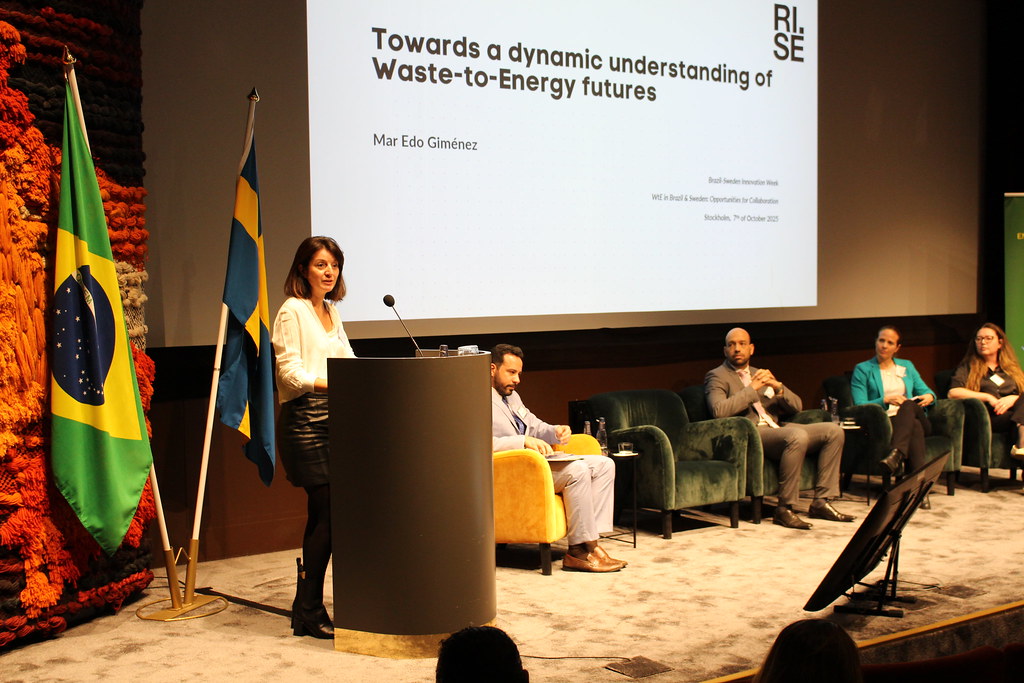
WECoS at the 2025 Brazil-Sweden Innovation Week
WECoS participated at the 2025 Brazil-Sweden Innovation Week organized by the Embassy of Brazil in Stockholm and that took place on the 6th and 7th of October.
In 2025 the Innovation Week focused on energy transition, featuring panels in the priority areas, as well as other fields, such as artificial intelligence and decarbonization of supply chains. The participants came from both governments, funding agencies, the private sector and academia. Together, we discussed the priority areas included in the working plan between the two countries (sustainable mining, sustainable cities, bioeconomy and life sciences), broadcasting Brazil’s image as an innovative country and exploring new opportunities for collaboration.
WECoS was presented during the session “Waste-to-Energy in Brazil and Sweden: Opportunities for Collaboration”. This session focused on the transformation of waste into energy, through economically sustainable solutions that encompass resource optimization and environment protection.
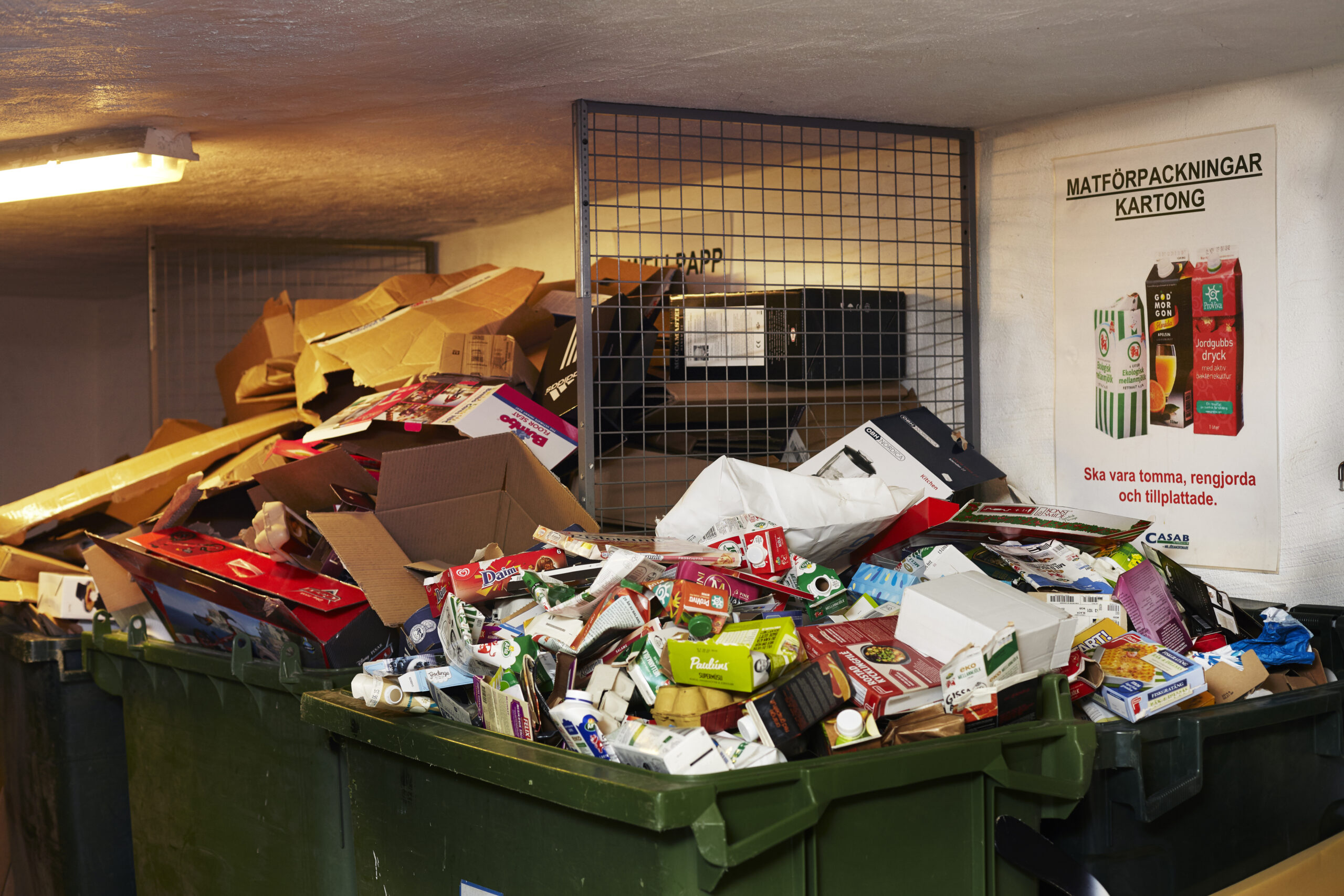
Short article: Avfall: Hushållens preferenser för sortering och insamling
2024
Webinar - System Dynamics: Decision Tool for Municipalities & Waste-to-Energy
On the 12th of November 9:00-10:30 CET we will introduce you to System Dynamics Modelling as a tool to support group decision-making in systems with high complexity, with a focus on waste handling and energy conversion; followed by a panel discussion on barriers and opportunities to this approach with experts in the field. Join us!

2023
Nu formas en mänskligare energiåtervinning
2026
Projektuppdatering
Kontaktpersoner
Ta gärna kontakt med oss om du har frågor eller funderingar.